Omics to close the loop
A living lab harnessing omics sciences to turn organic residues into high-value resources, accelerating the shift toward carbon-neutral agriculture.
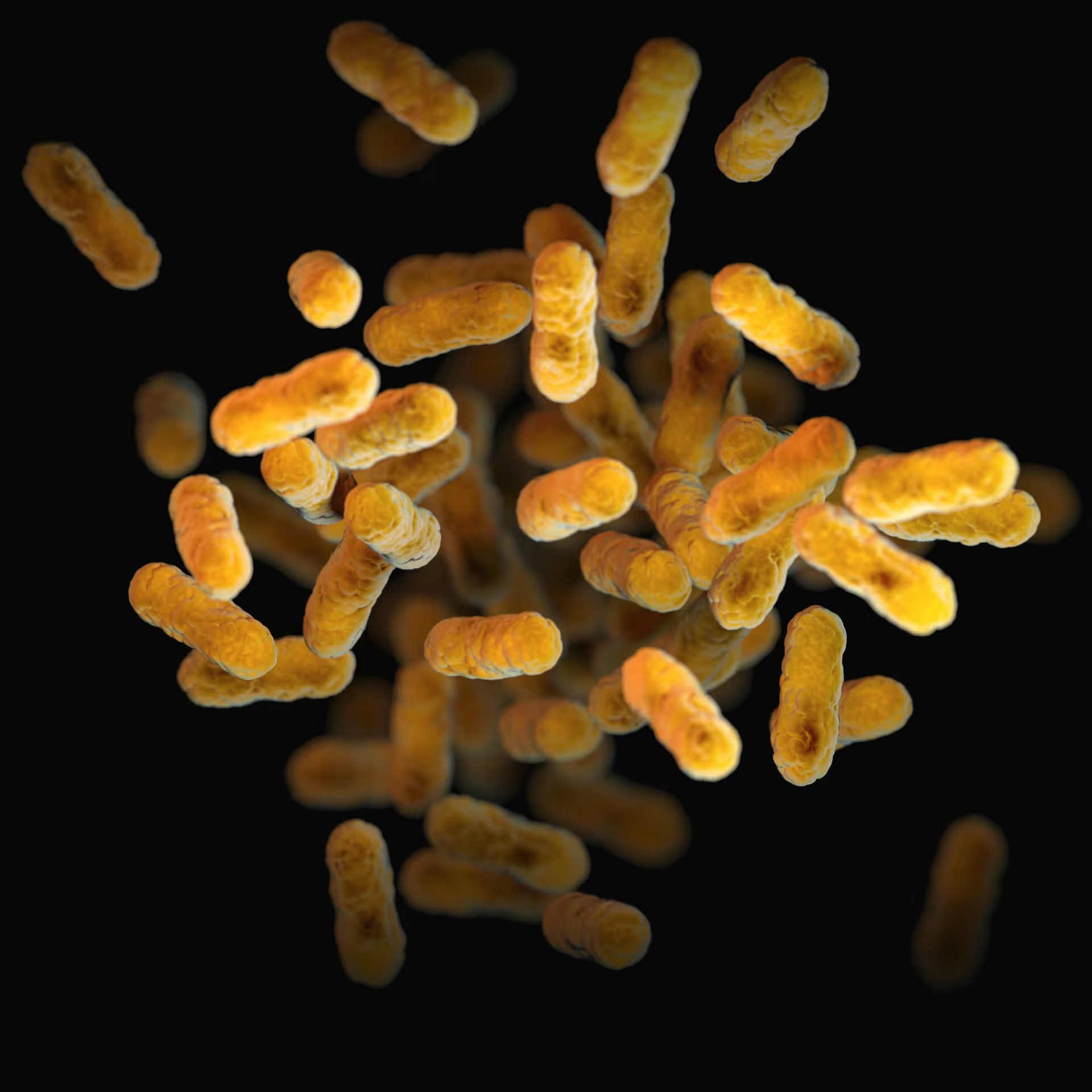
Canadian agriculture is squandering considerable value
140 Mt CO₂‑eq are emitted every year along the agri-food chain, largely because valuable biological resources are wasted or poorly used. By aligning more closely with natural biological processes and reducing reliance on synthetic inputs, the sector can produce in a smarter, more circular, and more regenerative way.
What omics sciences make possible
Omics approaches reveal hidden biological mechanisms and open new paths for turning residues into resources.
Understanding living systems
Optimizing biotransformations
Adding value to biomass
The lab's bioreactors
.jpg)
Insects and proteins
.jpg)
Cultivated mushrooms
.jpg)
Living compost
Beyond the natural sciences
The project integrates environmental impact assessments and techno-economic analyses to optimize business models, alongside a living lab that brings together researchers, citizens, businesses, communities, and public institutions. The goal is to help build a strong, innovative, and sustainable Quebec bioeconomy.